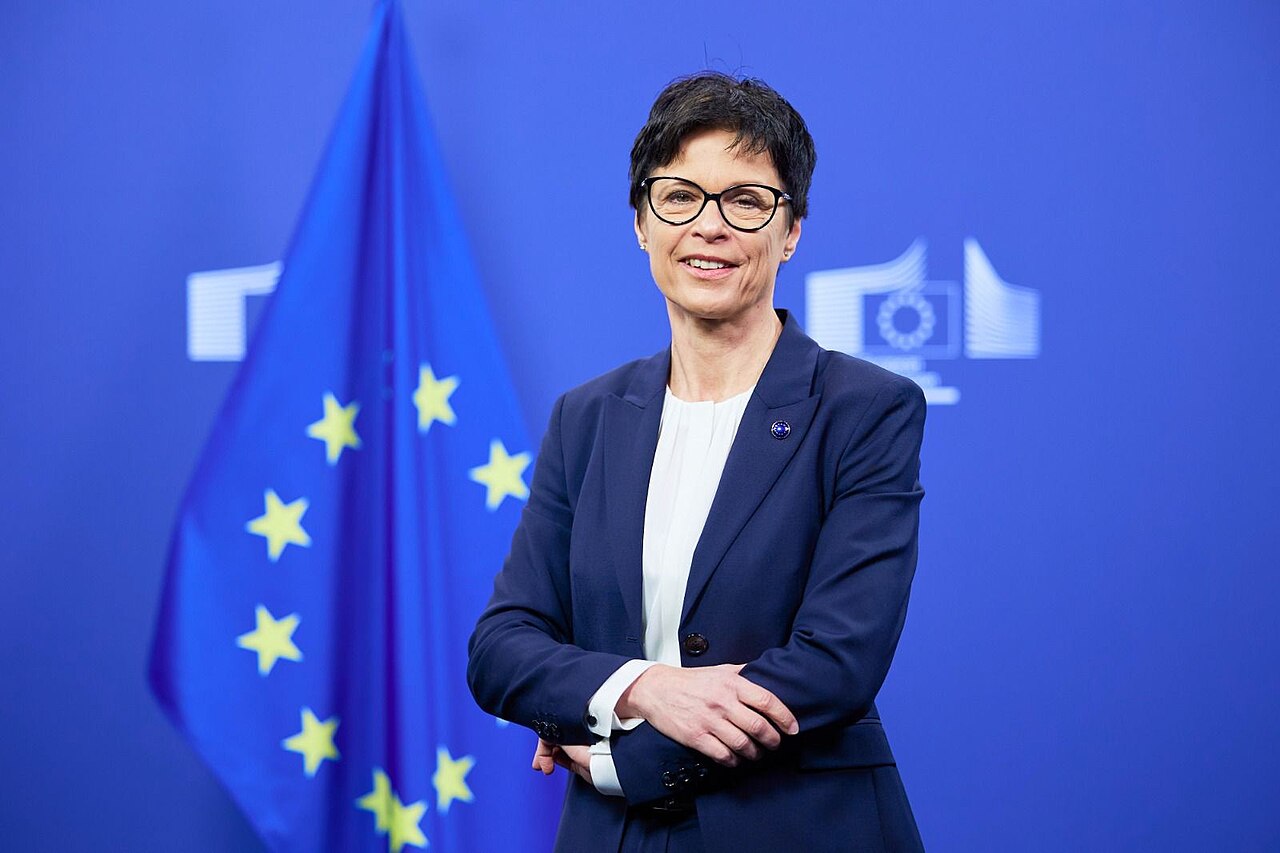
Marta Kos 2025. The picture was taken by the Audiovisual team of the European Commission. – https://commission.europa.eu/about/organisation/college-commissioners/marta-kos_en
Executive summary: The European Union’s enlargement chief, Marta Kos, has warned that the bloc’s outdated accession model must be fundamentally reformed to manage Ukraine’s bid to join the EU. While maintaining strict adherence to foundational EU standards, Brussels is actively debating innovative, gradual integration pathways, including a proposed “associate member” status, to ensure Ukraine is securely brought into the European fold.
Geopolitical imperative
The European Union’s decades-old framework for admitting new member states is facing unprecedented pressure, prompting calls for urgent reform at the highest levels in Brussels. Marta Kos, the EU’s enlargement chief, has emphasized that national capitals must agree quickly on a “different” accession system, warning that Ukraine’s historic bid could otherwise overwhelm the bloc’s current model.
The push to revamp the accession process is largely driven by the geopolitical realities stemming from Russia’s ongoing invasion of Ukraine. The EU relies on a rigid approach and has not admitted a new member state since 2013; a status quo that Kos argues she is not there to manage.
“If there is a right time to accelerate enlargement, the time is right now,” Kos stated, urging EU leaders “to come from words to actions”. She underscored the strategic stakes, warning that failing to build a strong continent could leave a vacuum for adversaries to exploit against the EU.
The debate over gradual integration
As Brussels searches for an “innovative” approach, the concept of gradual integration has taken center stage. German Chancellor Friedrich Merz recently proposed granting Ukraine an “associate member” status. This model would offer Ukraine tangible benefits and integration measures while it works through necessary legal reforms, but would initially fall short of full membership.
President Volodymyr Zelenskyy has pushed back against this specific proposal, labeling it “unfair” as it would allow his country to participate in EU meetings without a vote.
Despite this friction, Kos welcomed the debate initiated by Merz’s proposal, noting that EU leaders privately desire a balance that includes “a combination of merit-based principle… [and] more possibilities of the gradual integration”. She emphasized that bringing enlargement over the finish line is an issue that must be handled directly by leaders.
Uncompromising fundamentals and realistic timelines
While advocating for systemic innovation, Kos was resolute that there is “no mercy on fundamentals”. Core EU standards regarding the rule of law, judicial independence, and anti-corruption measures remain absolute prerequisites for accession.
Kos also addressed expectations regarding timelines. She frankly noted that President Zelenskyy’s demand for EU accession next year is “impossible,” though she recognized that such ambitious targets successfully inject vital urgency into the debate.
Furthermore, Kos suggested a potential shift in strategy regarding regional candidates. The “artificial” binding together of Ukraine and Moldova’s accession processes could end this summer with the opening of formal negotiations for both countries, allowing each nation to be assessed independently based on who can “deliver more”.
Path forward
For the Kyiv Institute for European Integration, these statements from Brussels signal a pivotal moment. The European Commission increasingly recognizes that integrating Ukraine is not merely an act of enlargement, but a matter of the EU’s future.
As Kos stated, “Ukraine is simply too big to fail. That’s why it deserves special care”. The challenge now lies with EU member states to rapidly design an accession mechanism robust and flexible enough to bring Ukraine into the European Union.
Source: Financial Times, 28 May 2026
No responses yet